The Greater Fool Theory: Why We Buy Things We Know Are Worthless
Introduction: The Rationality Paradox
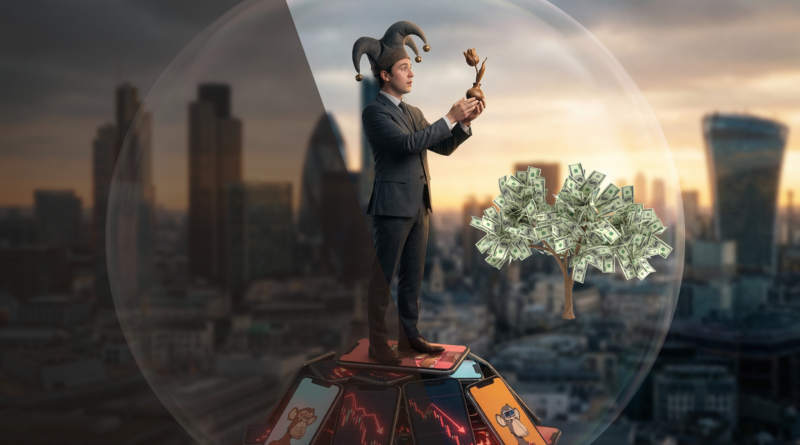
Why would a perfectly rational person in the 17th century trade a stone mansion on the finest canal in Amsterdam for a single Semper Augustus tulip bulb? Why would a modern investor spend $100,000 on a digital picture of a bored monkey (NFT) that anyone can right-click and save for free?
The answer isn’t “stupidity.” Intelligence has very little to do with it. The answer is a seductive psychological trap known as The Greater Fool Theory.
This theory suggests that it is perfectly profitable to buy an asset at an indefensibly high price—far beyond its intrinsic value—as long as there is a “greater fool” willing to buy it from you tomorrow for even more. In this game, the asset itself doesn’t matter. It could be a flower, a dot-com domain, or a meme coin. The only thing that matters is the belief that the line will keep going up.
It works perfectly… right until the music stops, and you run out of fools.
The Mechanism of Mania: Inside the “Tavern Colleges”
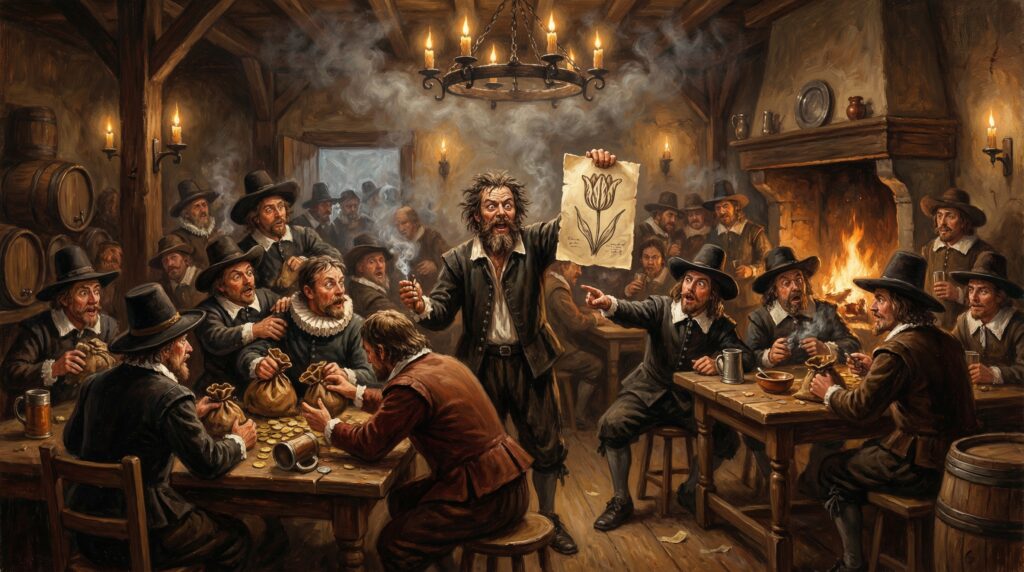
Tavern Colleges”—pubs filled with alcohol, tobacco smoke, and intense social pressure.
Imagine sitting in one of these taverns. You are a prudent merchant who works hard for a modest 5% return. Across the room, you see your neighbor—a man you know is less intelligent and lazier than you—ordering rounds of drinks because he just made your entire year’s salary in an afternoon trading bulbs.
This is where psychology overrides logic. When we witness others getting rich with zero effort, our brain’s logic centers (the prefrontal cortex) begin to shut down. They are hijacked by the limbic system, the ancient part of the brain responsible for emotion and survival.
- Social Proof: “If everyone is doing it, it must be safe.”
- Envy: “Why should he get rich and not me?”
- FOMO (Fear Of Missing Out): The pain of missing a gain is often psychologically stronger than the pain of an actual loss.
We don’t buy the tulip because we love flowers. We buy the tulip because we can’t stand the thought of being the only one without one.
In our latest video, we take you back to the smoky, candlelit backrooms of the 17th century Dutch Republic. These weren’t the sterile, regulated stock exchanges we know today. They were known as “
The Role of Dopamine: The “Wind Trade”
In 1637, the Dutch coined a perfect term for this speculation: Windhandel (The Wind Trade). Investors were buying contracts for bulbs that were still buried deep in the frozen ground. No one could see them. No one could verify them. They were trading “wind.”
From a neurological perspective, this uncertainty is like rocket fuel for dopamine. Dopamine is not just the molecule of pleasure; it is the molecule of anticipation. The brain releases more dopamine when the reward is uncertain than when it is guaranteed.
- Then: Waiting anxiously for the tulip to bloom in Spring to reveal its colors.
- Now: Refreshing your phone screen at 3 AM, waiting for the crypto chart to hit “the moon.”
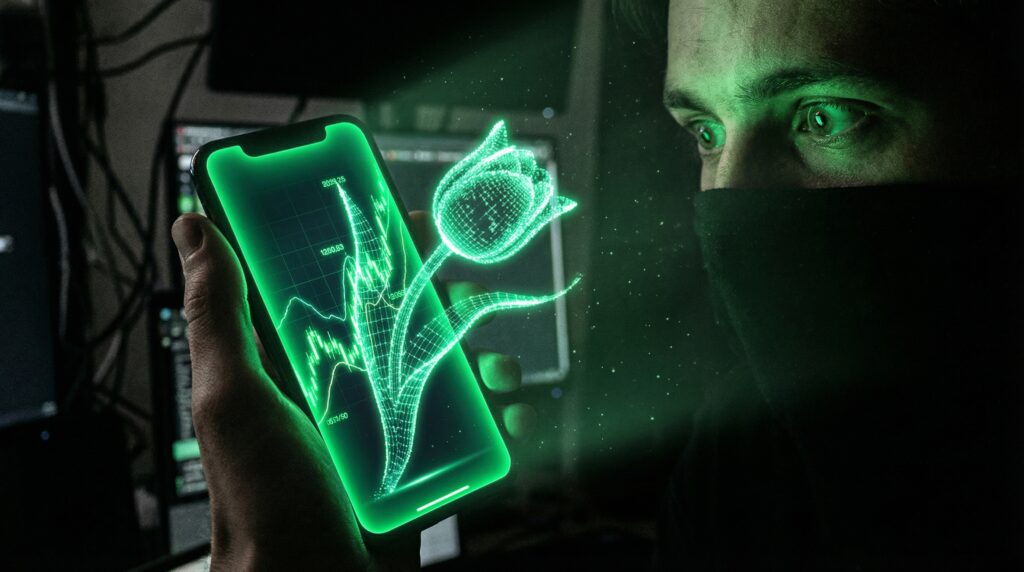
The vehicle changes—from petals to pixels—but the chemical reaction in our brains is identical. We become addicted not to the profit, but to the thrill of the gamble.
How to Spot the Trap
How do you know if you are investing or just participating in a Greater Fool scheme? Look for these three psychological red flags:
- Decoupling from Reality: The price of the asset has no relationship to its utility or cash flow. (e.g., A company with no revenue valued at billions).
- “This Time It’s Different”: Supporters claim that old metrics of valuation no longer apply because of a “new paradigm” or “new technology.”
- Justification by Price Action: The only argument for buying it is “look how much it went up yesterday.”
Key Takeaway
Markets are cyclical, but human nature is constant. The bubbles of history are not monuments to stupidity; they are monuments to human psychology.
Participating in a bubble can be profitable, but it requires a dangerous level of timing and luck. Before you click “buy” on the next hype train, look around the metaphorical poker table.
If you can’t identify the “greater fool” in the market, it’s probably you.
Recommended Reading
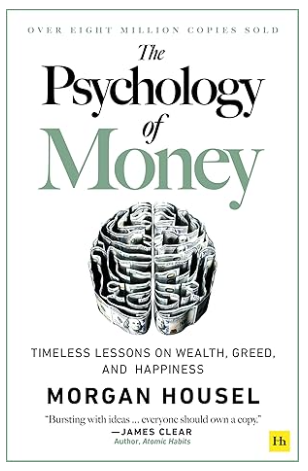
**OVER 8 MILLION COPIES SOLD AROUND THE WORLD… The Psychology of Money is the original bestselling classic from the author of the new book, Same as Ever.**
Doing well with money isn’t necessarily about what you know. It’s about how you behave. And behavior is hard to teach, even to really smart people.
Money―investing, personal finance, and business decisions―is typically taught as a math-based field, where data and formulas tell us exactly what to do. But in the real world people don’t make financial decisions on a spreadsheet. They make them at the dinner table, or in a meeting room, where personal history, your own unique view of the world, ego, pride, marketing, and odd incentives are scrambled together.
The New 2018 ebook best selling series has begun! William D. Danko’s True Prosperity ~ Takes More Than Money.
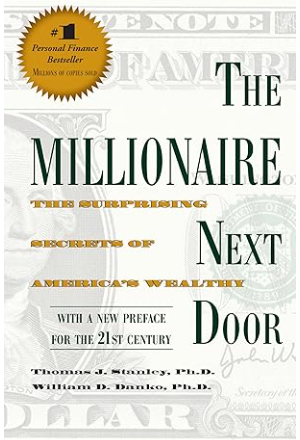
The bestselling The Millionaire Next Door identifies seven common traits that show up again and again among those who have accumulated wealth. Most of the truly wealthy in this country don’t live in Beverly Hills or on Park Avenue-they live next door. This new edition, the first since 1998, includes a new foreword for the twenty-first century by Dr. Thomas J. Stanley.