
Did a Sailor Really Eat a Million Dollar Flower? The Truth About Tulip Mania
It sounds like a scene from a comedy movie. A hungry sailor, looking for a snack, finds an onion on a merchant’s counter. He slices it up, eats it with his herring, and finishes his breakfast.
But it wasn’t an onion. It was a Semper Augustus tulip bulb—worth enough to feed his entire ship’s crew for a year.
This is just one of the many wild stories surrounding Tulip Mania, the 17th-century economic bubble that gripped the Netherlands. But how much of it is true? In our latest documentary, we travel back to the Dutch Golden Age to separate myth from reality.
The Golden Age of Greed
In the 1630s, Amsterdam was the center of the world. Money was flowing in from the spice trade, and a new class of wealthy merchants wanted a way to show off. Enter the Tulip.
Unlike gold or diamonds, tulips were fragile. They were temporary. And due to a mysterious virus (which we explain in the video), the most beautiful ones were incredibly rare.
Myth vs. Reality
History books often tell us that the entire Dutch economy collapsed because of flowers. But modern historians like Anne Goldgar paint a different picture.
- The Myth: Everyone from chimney sweeps to dukes was trading.
- The Reality: It was mostly a niche game played by wealthy merchants in smoky taverns.
- The Myth: The economy was destroyed.
- The Reality: The rich lost some “play money,” but the ships kept sailing.
However, the psychological lesson remains. Whether it’s 1637 or 2026, human nature doesn’t change. We see a price going up, and we want in.
Recommended Reading:
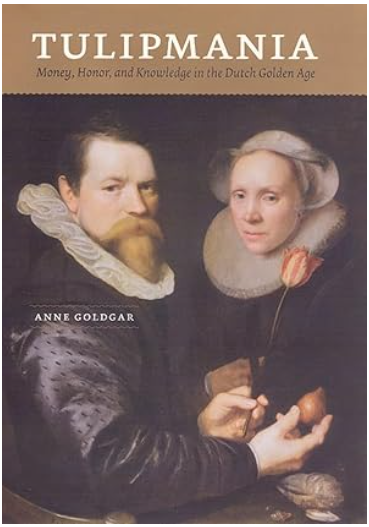
In the 1630s the Netherlands was gripped by tulipmania: a speculative fever unprecedented in scale and, as popular history would have it, folly. We all know the outline of the story—how otherwise sensible merchants, nobles, and artisans spent all they had (and much that they didn’t) on tulip bulbs. We have heard how these bulbs changed hands hundreds of times in a single day, and how some bulbs, sold and resold for thousands of guilders, never even existed. Tulipmania is seen as an example of the gullibility of crowds and the dangers of financial speculation.
But it wasn’t like that. As Anne Goldgar reveals in Tulipmania, not one of these stories is true. Making use of extensive archival research, she lays waste to the legends, revealing that while the 1630s did see a speculative bubble in tulip prices, neither the height of the bubble nor its bursting were anywhere near as dramatic as we tend to think. By clearing away the accumulated myths, Goldgar is able to show us instead the far more interesting reality: the ways in which tulipmania reflected deep anxieties about the transformation of Dutch society in the Golden Age.
“Goldgar tells us at the start of her excellent debunking book: ‘Most of what we have heard of [tulipmania] is not true.’. . . She tells a new story.”—Simon Kuper, Financial Times