The Philosophy Behind Wealth Nobody Teaches
Most people chase wealth as if it were a destination.
A number.
A lifestyle.
A finish line.
But history, philosophy, and psychology all point to the same uncomfortable truth:
Wealth is not the reward for intelligence.
It is the byproduct of discipline, patience, and emotional control.
Money follows behavior — not the other way around.

The Ancient Mistake: Confusing Desire With Strategy
From ancient empires to modern markets, humans have made the same mistake over and over again:
they confuse desire with strategy.
The Stoics warned against this long before stock charts existed.
They understood something most investors still ignore:
You cannot control outcomes.
You can only control yourself.
Markets rise and fall.
Opportunities appear and disappear.
But emotional reactions — fear, greed, impatience — remain constant across centuries.
Why Intelligence Often Works Against You
High intelligence comes with a hidden cost.
Smart minds tend to:
- Overanalyze
- Chase perfect timing
- Constantly question decisions
- Panic when reality diverges from theory
This creates paralysis — or worse, emotional overreaction.
Meanwhile, disciplined minds follow simple rules:
- They act when conditions are reasonable, not perfect
- They stay consistent when others quit
- They accept boredom as the price of long-term success
Wealth rewards behavioral stability, not intellectual brilliance.
Philosophy’s Quiet Advantage: Detachment
One of the most powerful philosophical tools in wealth-building is detachment.
Not indifference.
Not laziness.
But emotional distance.
When you detach:
- Losses don’t trigger panic
- Gains don’t trigger arrogance
- Decisions become repeatable
This is why the best investors often look boring.
They are not chasing excitement.
They are avoiding regret.

The Real Wealth Equation
If philosophy had to summarize wealth in one sentence, it would be this:
Freedom is the ability to remain rational when others lose control.
Wealth compounds when:
- Decisions are boring
- Emotions are regulated
- Time is allowed to do the heavy lifting
This is not motivational advice.
It is behavioral mathematics.
Final Thought
Money is not impressed by ambition.
It responds to consistency.
If you want more wealth, don’t ask:
“How can I make more money?”
Ask instead:
“What kind of mind can manage it?”
Because wealth is not something you chase.
It’s something that follows.
Recommended Reading
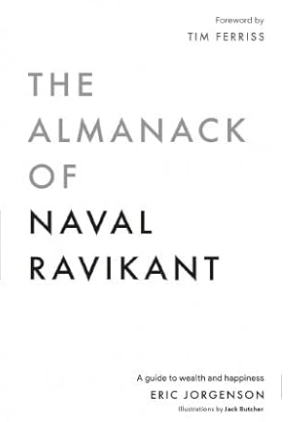
Getting rich is not just about luck; Happiness is not just a trait we are born with. These aspirations may seem out of reach, but building wealth and being happy are skills we can learn. So what are these skills, and how do we learn them? What are the principles that should guide our efforts? What does progress really look like? Naval Ravikant is an entrepreneur, philosopher, and investor who has captivated the world with his principles for building wealth and creating long-term happiness.
The Almanack of Naval Ravikant is a collection of Naval’s wisdom and experience from the last ten years, shared as a curation of his most insightful interviews and poignant reflections. This isn’t a how-to book, or a step-by-step gimmick. Instead, through Naval’s own words, you will learn how to walk your own unique path toward a happier, wealthier life.
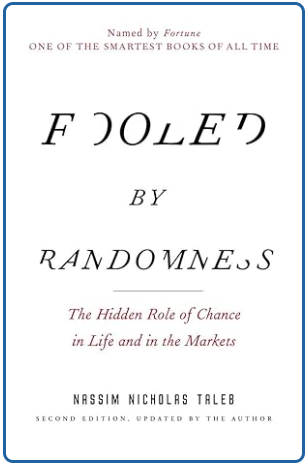
Fooled by Randomness is a standalone book in Nassim Nicholas Taleb’s landmark Incerto series, an investigation of opacity, luck, uncertainty, probability, human error, risk, and decision-making in a world we don’t understand. The other books in the series are The Black Swan, Antifragile, Skin in the Game, and The Bed of Procrustes.
Fooled by Randomness is the word-of-mouth sensation that will change the way you think about business and the world. Nassim Nicholas Taleb–veteran trader, renowned risk expert, polymathic scholar, erudite raconteur, and New York Times bestselling author of The Black Swan–has written a modern classic that turns on its head what we believe about luck and skill.