Rome Didn’t Fall to Barbarians—It Fell to Inflation (Silver’s Warning Today)
When markets move fast, people look for simple explanations.
A headline. A villain. A reason.
Rome’s fall is usually explained the same way: barbarians, wars, chaos.
But the truth is more uncomfortable.
Rome didn’t collapse because of one invasion.
It collapsed because its money lost credibility.
And once that happens, everything else follows.
Today, when we see silver prices explode upward in a near-vertical move, we should remember this:
the most dangerous moments in markets are the moments that feel “obvious.”
The Hidden Killer in Rome’s Pocket
In the beginning, Rome’s economy was powered by trust.
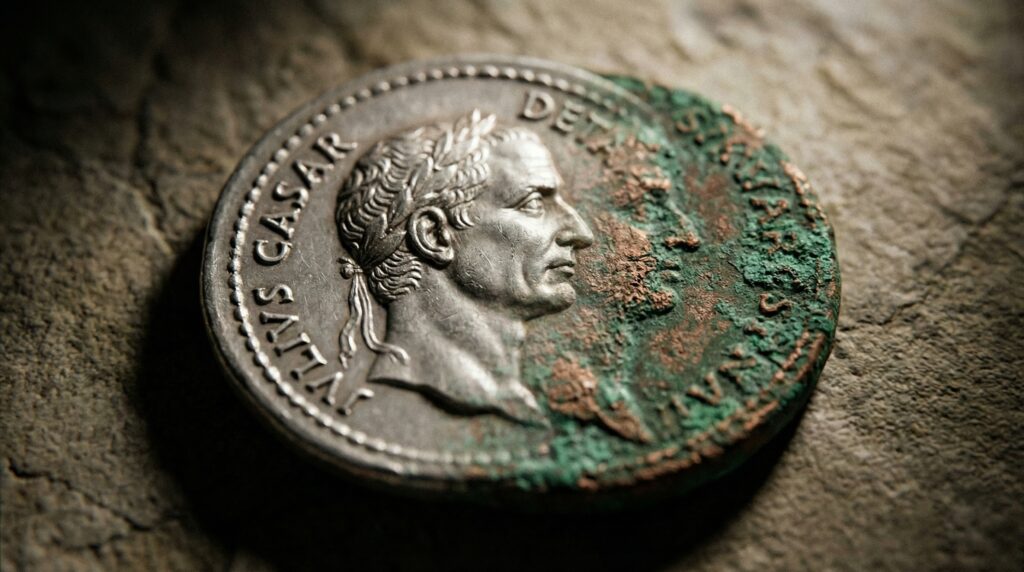
The silver Denarius was respected across the empire. It wasn’t just a coin — it was a contract between the state and its citizens:
“This holds value. This is stable. You can build your life on it.”
But empires, like people, get tempted.
Wars got expensive.
Palaces got bigger.
Politics demanded spending.
Instead of raising taxes openly, Roman leaders chose a quieter option:
They debased the currency.
They melted silver coins and mixed in cheap copper.
The coin still looked official — but it carried less real value inside.
This is the oldest financial trick in history:
Keep the appearance. Reduce the substance.
Inflation Is Not an Economic Problem — It’s a Moral One
Inflation destroys more than purchasing power.
It destroys time.
Because when money becomes unstable, long-term planning becomes impossible.
People stop thinking in decades.
They start thinking in days.
- Workers demand higher wages
- Prices rise faster than salaries
- Savings feel pointless
- Risk-taking increases
- Trust disappears
Eventually, the economy becomes emotional instead of rational.
And that’s what kills empires: not just inflation itself, but the behavior it creates.
Why “Vertical Charts” Are Psychologically Dangerous
Now let’s bring this to today.
When silver moves up aggressively, the market creates a story:
- “This time is different.”
- “It can only go higher.”
- “I’m late.”
- “I need to buy now.”
A vertical chart doesn’t just move price — it moves people.
It triggers a primitive survival response:
fear of missing out.
And that’s why parabolic moves often end the same way:
- late buyers rush in
- smart money sells into the excitement
- liquidity dries up
- a sharp pullback happens
- the crowd panics again
The painful truth is this:
Most people don’t lose money because they’re wrong.
They lose money because they can’t control themselves when they’re right.
Rome’s Lesson: When Trust Breaks, Everything Breaks
Rome didn’t collapse overnight.
It decayed from within.
Money became unreliable.
Trade became harder.
People lost faith — not only in coins, but in the system.
When money becomes unstable:
- society becomes reactive
- politics becomes desperate
- productivity collapses
- corruption spreads
- the strongest institutions weaken
Inflation isn’t loud at first.
It’s silent. Then sudden.
Just like a market bubble.

Silver: Bubble, Breakout, or a Test of Discipline?
So is silver about to crash?
That’s not the right question.
The better question is:
Can you stay disciplined if it drops 15% in a week?
Can you stay rational if it rises another 30% without you?
Because the real wealth skill isn’t prediction.
It’s emotional control.
Whether silver is in a bubble or a breakout, the winning mindset is the same:
- plan your entries
- size your risk
- respect volatility
- avoid emotional decisions
- survive long enough for compounding to matter
The market’s job is to test your patience.
Your job is to pass the test.
Final Thought: Wealth Follows Discipline, Not Panic
Rome is the reminder.
Silver is the signal.
History doesn’t repeat perfectly — but human behavior repeats reliably.
If you can master your impulses when the chart goes vertical, you’ll be ahead of most people on earth.
That’s the real edge.
Not information.
Not intelligence.
Discipline.
Youtube link:
https://youtube.com/shorts/irvY_sbOhtA?feature=share
Recommended Reading:
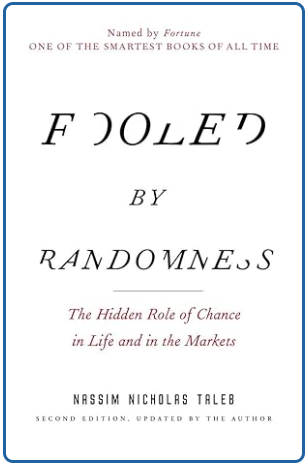
Fooled by Randomness is a standalone book in Nassim Nicholas Taleb’s landmark Incerto series, an investigation of opacity, luck, uncertainty, probability, human error, risk, and decision-making in a world we don’t understand. The other books in the series are The Black Swan, Antifragile, Skin in the Game, and The Bed of Procrustes.
Fooled by Randomness is the word-of-mouth sensation that will change the way you think about business and the world. Nassim Nicholas Taleb–veteran trader, renowned risk expert, polymathic scholar, erudite raconteur, and New York Times bestselling author of The Black Swan–has written a modern classic that turns on its head what we believe about luck and skill.
Getting rich is not just about luck; happiness is not just a trait we are born with. These aspirations may seem out of reach, but building wealth and being happy are skills we can learn.
So what are these skills, and how do we learn them? What are the principles that should guide our efforts? What does progress really look like?
Naval Ravikant is an entrepreneur, philosopher, and investor who has captivated the world with his principles for building wealth and creating long-term happiness.
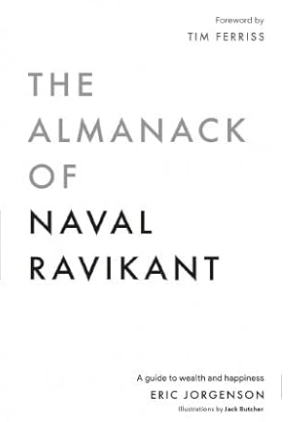
The Almanack of Naval Ravikant is a collection of Naval’s wisdom and experience from the last ten years, shared as a curation of his most insightful interviews and poignant reflections.