4 Surprising Truths About Palantir Before Its Next Big Move
For Palantir (PLTR) investors, the period leading into an earnings call is rarely calm, and the recent sharp pullback has amplified the uncertainty to a fever pitch. With the stock experiencing significant volatility just as a pivotal report looms, many are left wondering if the recent drop is a red flag or a rare opportunity.
But this volatility isn’t just noise; it’s a moment that strips away market sentiment to reveal deeper truths about the company’s fundamentals and the psychology of its investors. Instead of reacting to the daily price swings, a closer look at expert analysis provides a more grounded perspective. This article cuts through the hype and fear to reveal four of the most surprising and counter-intuitive takeaways that can help you see Palantir stock in a completely new light.
1. A Sharp Drop Can Be the Best Thing for a Stock
The idea that a 16% drop in a month could be a positive development seems absurd, yet some analysts argue it’s a “huge money-making opportunity.” Instead, as analyst Tom Nash argues, the sell-off appears to be driven purely by market psychology. This view hinges on understanding that the decline wasn’t triggered by any negative business news—no major contracts were canceled, and no key executives departed.
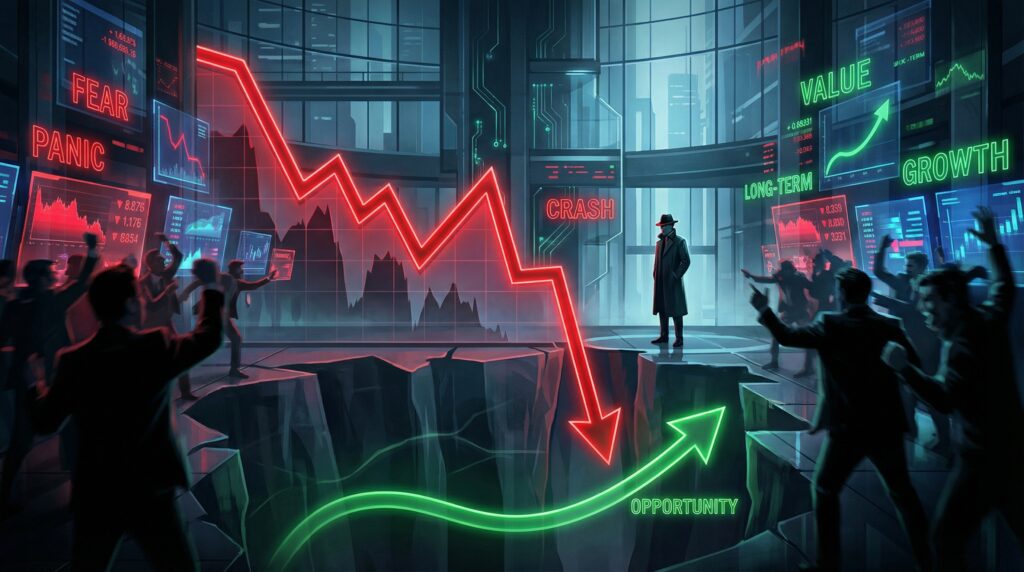
The market simply has “jitters.” Inexperienced retail investors and short-term traders, reacting to fear ahead of an uncertain earnings event, are often the ones selling. This creates a disconnect between the company’s actual performance and its short-term stock price. Experienced investors, however, use a “system and discipline” to protect themselves from these moments of fear. As Nash points out, investor emotions are a powerful, and often irrational, market force.
…90% of investors lose money consistently in a market that only goes up. Well that is because of psychology it’s not because of lack of intelligence it’s not because of lack of capital that is because of two emotions fear and greed.
For investors with a long-term outlook, these moments of fear, detached from fundamental reality, can become prime accumulation periods. The sell-off forces a single, critical question that every investor must answer for themselves: “Do you think that Palantir is still a multi-year compounder?” If the answer is yes, then a lower price is a gift, not a crisis.
2. The Valuation Is Extreme, and That’s the Point
To say Palantir’s valuation is rich is an understatement; it trades at a forward price-to-earnings (P/E) ratio of around 292 times, a figure more than 800% above the sector median of 32. It’s an “extreme” valuation that, on the surface, suggests the stock is priced for near-perfect execution with zero room for error.
However, the bull case argues that this premium is not just warranted, but necessary. In a detailed breakdown of the company’s most recent earnings report, analyst Rick Orford highlights several key pillars supporting this view:• Explosive Growth: Revenue surged 63%, while net income skyrocketed an astonishing 232%.• Operating Leverage: With an exceptional gross margin of 82.5%, profits are growing significantly faster than revenue, meaning each new dollar is more profitable than the last.• The Commercial Story: Commercial revenue grew 73%, demonstrating that Palantir has successfully diversified beyond its government contracts.• Fortress Balance Sheet: The company holds zero long-term debt, giving it immense flexibility to invest aggressively in growth.This perspective is echoed by the analysis from Stealth Wealth Investing, which argues that for a company with “otherworldly” earnings, “unlimited demand,” and the potential for accelerating growth, traditional metrics can be misleading. This explosive top-line growth is precisely why some analysts argue that the market’s obsession with its source—be it government or commercial—is a distraction. But this fundamental strength is currently locked in a tense standoff with the stock’s technical picture, which tells a much more precarious story. It brings to mind a famous insight from legendary investor Peter Lynch, highlighted by Tom Nash.
…it’s never a bad time to buy a great company and Palanteer has showed it again and again over the past few years…
3. The Technical Chart Has Reached a ‘Make-or-Break’ Moment
While the fundamental story points toward explosive growth, the technical chart is flashing a warning sign. According to a detailed technical analysis from the channel TechConversations, the stock has recently fallen into a position of significant stress. Two key developments stand out:1. For the first time since May 2023, Palantir has fallen below its 50, 100, and 200-day simple moving averages—a clear signal of a weakening short-term trend.2. A potentially bearish “head and shoulders” chart pattern has been forming on the weekly chart, a classic technical indicator that can foreshadow a major reversal.
The significance of this is amplified by the stock’s current price level. Palantir closed the week perched directly on the “neckline” of this pattern, a critical support level that also happens to align perfectly with its 50-week simple moving average.
This technical setup creates a point of extreme tension right before the earnings announcement. It pits the powerful fundamental growth story against a classic bearish chart pattern. The earnings report will likely act as the catalyst that resolves this battle. If the stock breaks below this critical support, analysts warn that the situation “could get very ugly.”
4. The Government vs. Commercial Debate Is a Red Herring
After every earnings report, a familiar debate emerges among analysts and investors: where is Palantir’s growth coming from? The market often obsesses over the revenue mix, celebrating commercial growth one quarter and lamenting a slowdown in government contracts the next.However, a more insightful perspective from Stealth Wealth Investing suggests this entire debate is a distraction, a “tempest in a teapot.” The only metric that truly matters is overall growth. As long as the total number of contracts, total revenue, and bottom-line earnings per share (EPS) are expanding, the specific sector driving that growth is largely irrelevant. Fixating on the mix is a recipe for missing the forest for the trees.
…literally cure cancer and I’m sure there will be someone out there who complains about it and says it’s a negative for the stock as long as they guide to more growth… I don’t care whether it’s coming from commercial or government…
This point is crucial because it refocuses attention on the company’s core mission: its ability to consistently find new business and expand its footprint, regardless of whether the client is a federal agency or a Fortune 500 company. The big picture is not about division performance, but about the relentless growth of the entire enterprise.
Conclusion: A Company of Contrasts
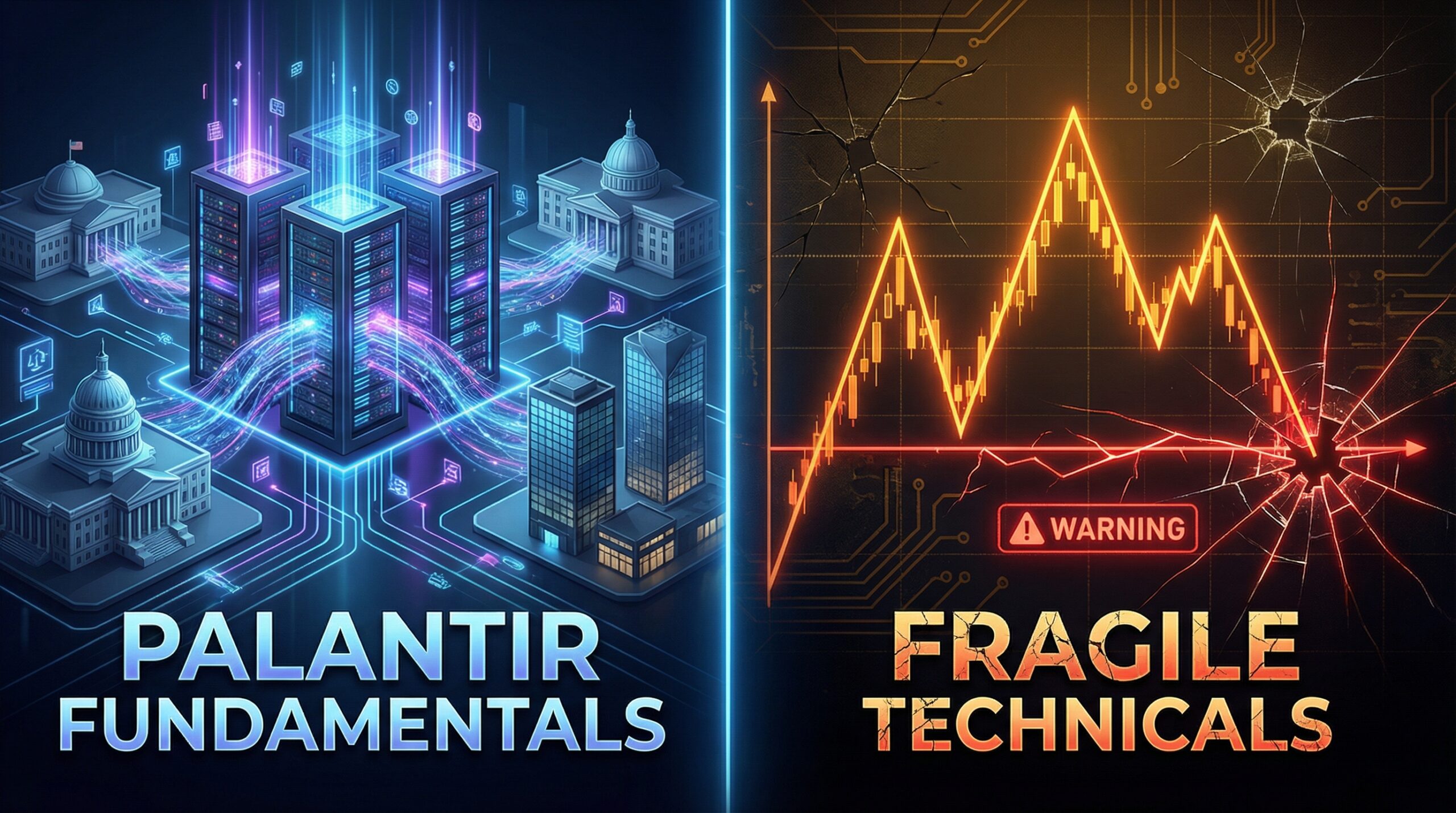
As its next earnings report approaches, Palantir stands as a company of stark contrasts. It is at once dangerously overvalued by traditional standards and fundamentally unstoppable by measures of growth and profitability. Its long-term business case appears stronger than ever, yet its technical chart has arrived at a critical make-or-break inflection point. This is the central tension that defines Palantir today.
As the company prepares to release its latest numbers, will explosive growth rewrite the rules of valuation, or is the chart signaling a gravity that even Palantir can’t defy?
Recommended Reading
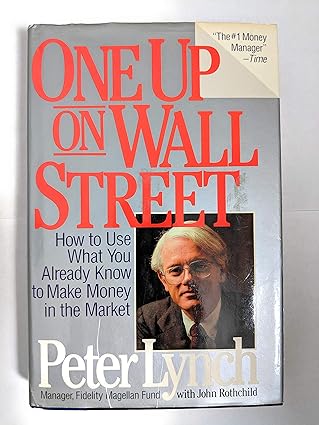
Product details
Best Sellers Rank: #1,257,056 in Books
ASIN : B00N4FJTAA
Publisher : Simon & Schuster
Item Weight : 1.44 pounds
Peter Lynch is vice chairman of Fidelity Management & Research Company — the investment advisor arm of Fidelity Investments — and a member of the Board of Trustees of the Fidelity funds. Mr. Lynch was portfolio manager of Fidelity Magellan Fund, which was the best performing fund in the world under his leadership from May 1977 to May 1990. He is the co-author of the bestselling Beating the Street and Learn to Earn, a beginner’s guide to the basics of investing and business. He lives in the Boston area
**OVER 8 MILLION COPIES SOLD AROUND THE WORLD… The Psychology of Money is the original bestselling classic from the author of the new book, Same as Ever.**
Doing well with money isn’t necessarily about what you know. It’s about how you behave. And behavior is hard to teach, even to really smart people.
Money―investing, personal finance, and business decisions―is typically taught as a math-based field, where data and formulas tell us exactly what to do. But in the real world people don’t make financial decisions on a spreadsheet. They make them at the dinner table, or in a meeting room, where personal history, your own unique view of the world, ego, pride, marketing, and odd incentives are scrambled together.