Fear Was Priced In — How Market Shakeouts Transfer Wealth to the Patient
There are five trading days in a week.
But sometimes, the entire story changes in the final 48 hours.
Mid-week selloffs don’t just move prices —
they test conviction.
This week was one of those moments.
Markets pulled back sharply.
Headlines turned red.
Social media filled with panic, certainty, and noise.
But beneath the surface, something more important was happening.
What Really Happened During the Mid-Week Selloff
On the surface, it looked like a normal correction.
In reality, it was a psychological stress test.
Prices didn’t fall because fundamentals suddenly collapsed.
They fell because uncertainty compressed time — fear made people act faster than logic.
This is how shakeouts begin:
- Weak conviction exits first
- Leverage unwinds
- Patience gets tested
The market doesn’t ask who is right.
It asks who can stay.
Why Indices Hide More Pain Than They Reveal
Indices smooth reality.
They average winners and losers into a single number, creating the illusion of stability.
But inside those indices, dispersion widens:
- Some stocks quietly break down
- Others absorb capital without headlines
- Leadership rotates while attention stays fixed
If you only watch the index, you miss the transfer happening underneath.
The Psychology of a Market “Shakeout”
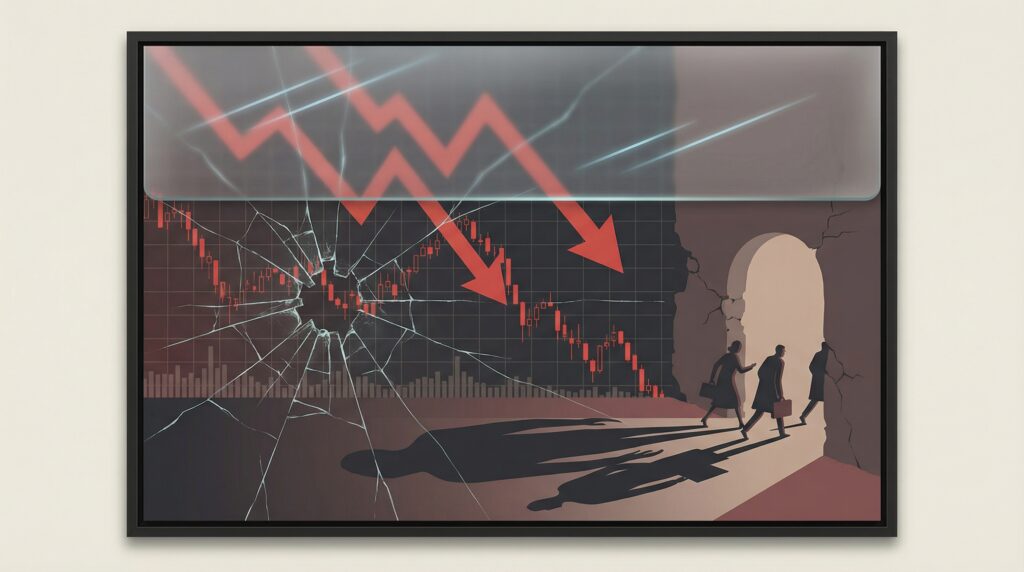
A shakeout isn’t about direction.
It’s about ownership.
Markets use volatility to:
- Remove emotional capital
- Punish impatience
- Reward those who planned before the move
Fear doesn’t destroy wealth.
Reaction does.
How Fear Transfers Wealth from the Impatient to the Patient
This isn’t theory.
It’s structure.
Every panic sell has a buyer.
Every forced exit becomes someone else’s entry.
The market is not cruel — it is mechanical.
It reallocates capital from:
- Those who need certainty
- To those who can tolerate uncertainty

Why Next Week’s Data Actually Matters
The upcoming data isn’t important because it predicts the future.
It matters because it resets narratives.
What’s coming:
- Retail Sales
- Jobs data
- Inflation prints
Together, they determine whether:
- Fear accelerates
- Or exhaustion sets in
Markets don’t move on data alone.
They move on how positioned investors are when data arrives.
This Is Not About Predictions
Predictions create confidence.
Preparation creates survival.
This moment isn’t asking:
“Where will price go?”
It’s asking:
“Are you positioned to sit through uncertainty?”
Turn Off the Noise. Stick to Your Plan.
Markets will always offer reasons to panic.
They rarely announce opportunities.
The real edge is not speed.
It’s discipline.
The market is a mechanism for transferring wealth
from the impatient to the patient.
Final Thought
If this week made you uncomfortable — good.
That discomfort is the cost of staying in the game.
And those who stay…
are the only ones eligible for the next move.
Recommended Reading
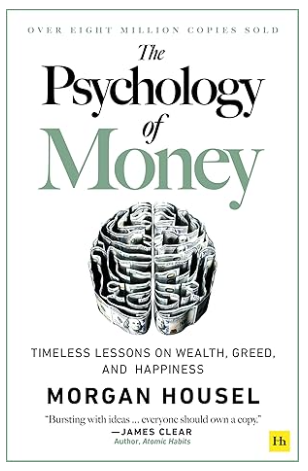
Special deluxe edition of The Psychology of Money with new bonus chapter content from Morgan Housel. Limited edition while supplies last.
The Sunday Times Number One Bestseller. Over 8 million copies sold around the world.
The original book from Morgan Housel, the New York Times bestselling author of Same As Ever.
As featured on the Dr Chatterjee podcast Feel Better, Live More and the Diary of a CEO podcast with Steven Bartlett.
Doing well with money isn’t necessarily about what you know. It’s about how you behave. And behavior is hard to teach, even to really smart people.
Money – investing, personal finance, and business decisions – is typically taught as a math-based field, where data and formulas tell us exactly what to do. But in the real world people don’t make financial decisions on a spreadsheet. They make them at the dinner table, or in a meeting room, where personal history, your own unique view of the world, ego, pride, marketing, and odd incentives are scrambled together.
75th Anniversary Edition
The classic work on investing, filled with sound and safe principles that are as reliable as ever, now revised with an introduction and appendix by financial legend Warren Buffett—one of the author’s most famous students—and newly updated commentaries on each chapter from distinguished Wall Street Journal writer Jason Zweig.
“By far the best book about investing ever written.”—Warren Buffett
Since its original publication in 1949, Benjamin Graham’s revered classic, The Intelligent Investor, has taught and inspired millions of people worldwide and remains the most respected guide to investing. Graham’s timeless philosophy of “value investing” helps protect investors against common mistakes and teaches them to develop sensible strategies that will serve them throughout their lifetime.