How Did a Superpower Fall? Introducing: “The Fall of the Roman Empire” Project
For centuries, it dominated the Mediterranean, created engineering marvels, laid the foundations of modern law, and was known as the “Eternal City.” Once, the sun never set on this massive empire. So, how did Rome eventually end up on its knees?
Our new video project, seeking answers to one of history’s greatest “how and why” questions, is now live!
From Golden Days to the Inevitable End
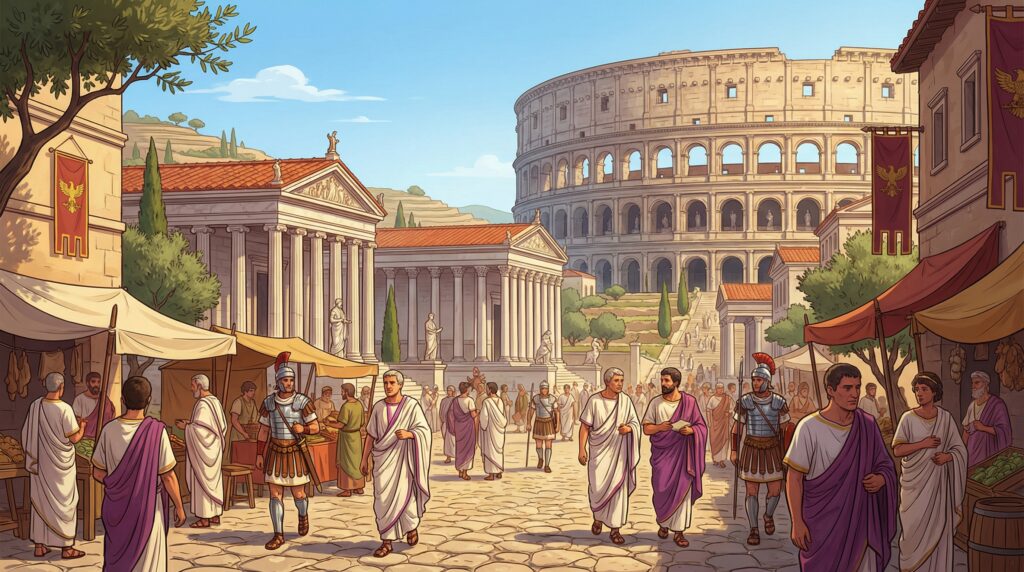
When we think of the Roman Empire, images of disciplined legions marching, majestic games at the Colosseum, and flawless marble cities usually come to mind. During the Pax Romana (Roman Peace), the empire was at the peak of its power. Borders were secure, trade was vibrant, and being a Roman citizen was the ultimate privilege.
However, history teaches us a bitter truth: No empire lives forever.
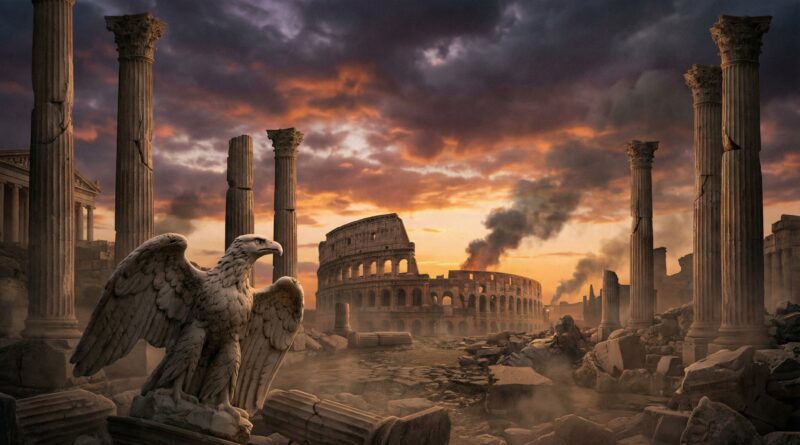
The Cracks That Caused the Collapse
Rome was not built in a day, nor did it fall in one. The cracks in the foundation of this massive structure deepened over centuries. But what triggered this process?
Was it merely the invasions of barbarian tribes? Or were internal rot, economic crises, endless succession wars, and moral decay more dangerous than the enemies at the gates?
In our new video project, we look for the causes of this complex process not just on the battlefields, but also within the corridors of the Senate and the empty state treasury.
Inside the Video: A Journey into the Depths of History
We have been working meticulously on this project for a long time. Our goal was not just to recite dry facts from history books, but to make you feel the atmosphere of that era. Through maps, period reenactments, and in-depth analysis, we examine frame by frame how Rome took its final breath.
What you will find in the video:
And finally: 476 AD, the end of the Western Roman Empire.
The Crisis of the Third Century and the division of the Empire.
The domino effect created by the Goths, Vandals, and Huns.
The economic collapse: Hyperinflation and crushing taxes.
The rise of Christianity and the shift in ancient Roman values.
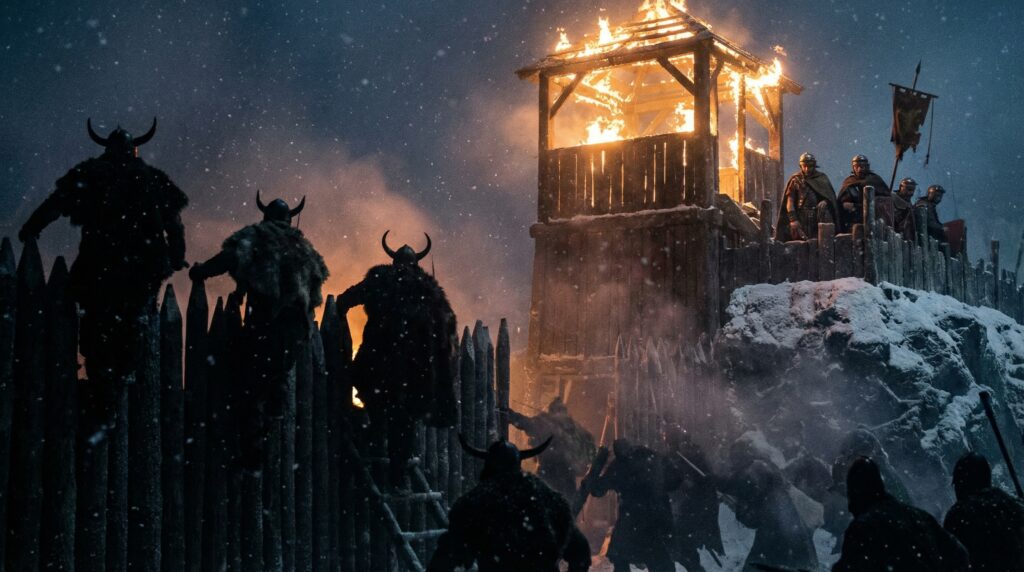
Watch the Video Now!
If you are ready to witness this epic and tragic story of the Roman Empire, we invite you to watch our video. Decide for yourself if history truly repeats itself.
Recommended Reading:
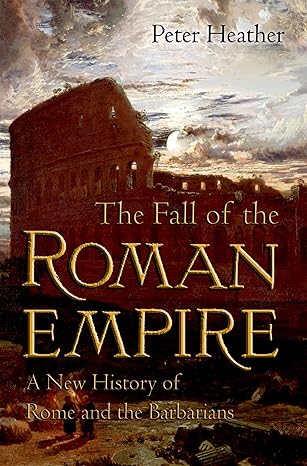
The death of the Roman Empire is one of the perennial mysteries of world history. Now, in this groundbreaking book, Peter Heather proposes a stunning new solution: Centuries of imperialism turned the neighbors Rome called barbarians into an enemy capable of dismantling an Empire that had dominated their lives for so long.
A leading authority on the late Roman Empire and on the barbarians, Heather relates the extraordinary story of how Europe’s barbarians, transformed by centuries of contact with Rome on every possible level, eventually pulled the empire apart. He shows first how the Huns overturned the existing strategic balance of power on Rome’s European frontiers, to force the Goths and others to seek refuge inside the Empire. This prompted two generations of struggle, during which new barbarian coalitions, formed in response to Roman hostility, brought the Roman west to its knees. The Goths first destroyed a Roman army at the battle of Hadrianople in 378, and went on to sack Rome in 410. The Vandals spread devastation in Gaul and Spain, before conquering North Africa, the breadbasket of the Western Empire, in 439. We then meet Attila the Hun, whose reign of terror swept from Constantinople to Paris, but whose death in 453 ironically precipitated a final desperate phase of Roman collapse, culminating in the Vandals’ defeat of the massive Byzantine Armada: the west’s last chance for survival.
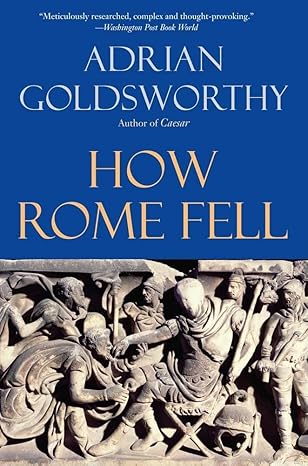
A major new history of the fall of the Roman Empire, by the prizewinning author of Caesar
In AD 200, the Roman Empire seemed unassailable, its vast territory accounting for most of the known world. By the end of the fifth century, Roman rule had vanished in western Europe and much of northern Africa, and only a shrunken Eastern Empire remained. In his account of the fall of the Roman Empire, prizewinning author Adrian Goldsworthy examines the painful centuries of the superpower’s decline. Bringing history to life through the stories of the men, women, heroes, and villains involved, the author uncovers surprising lessons about the rise and fall of great nations.
This was a period of remarkable personalities, from the philosopher-emperor Marcus Aurelius to emperors like Diocletian, who portrayed themselves as tough, even brutal, soldiers. It was a time of revolutionary ideas, especially in religion, as Christianity went from persecuted sect to the religion of state and emperors. Goldsworthy pays particular attention to the willingness of Roman soldiers to fight and kill each other. Ultimately, this is the story of how an empire without a serious rival rotted from within, its rulers and institutions putting short-term ambition and personal survival over the wider good of the state.